Comparative guide

Popular Philosophical and Ethical Topics

A compact guide for comparing Thomistic answers with influential modern alternatives. Each topic names the live question, the Thomistic center of gravity, and the contrast that usually shapes contemporary debate.

Topics
6
Method
Question, distinction, contrast
Use
Debate preparation and guided reading
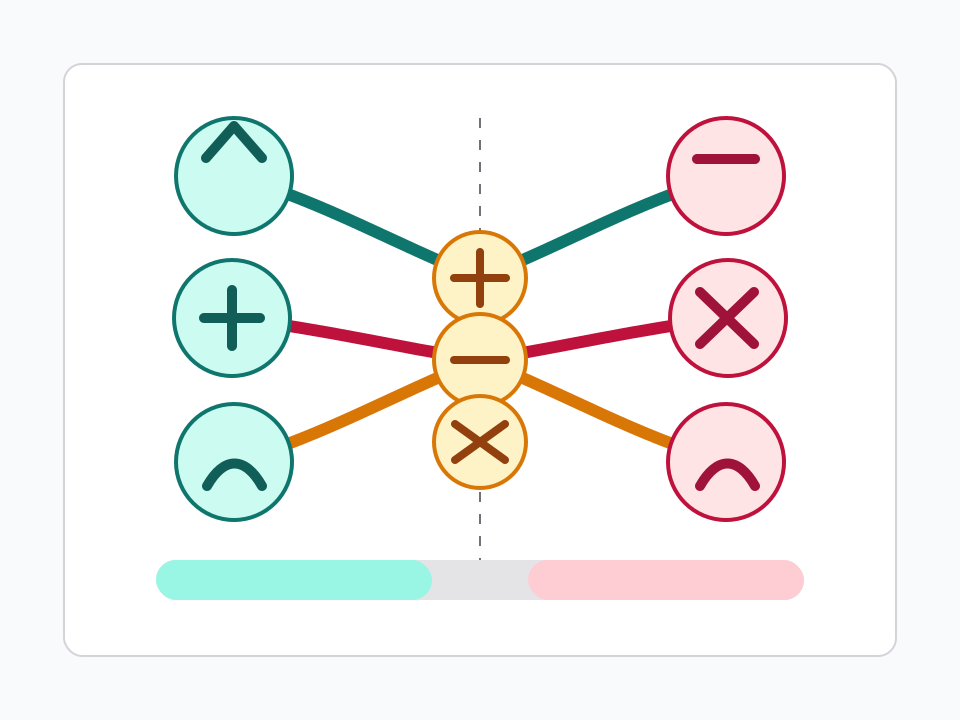
A visual map with two columns connected by lines, representing Thomistic views in contrast with modern alternatives.

Comparative guide

Contrasts at a glance

The modern positions below are broad families rather than single schools. The point is to locate the pressure point: being, nature, freedom, law, happiness, or suffering.

Metaphysics

God and reality

Is reality self-contained, or does finite being point beyond itself?

Classical theism and participation

God is not one being among others but ipsum esse subsistens, the subsistent act of being itself. Creatures are real, finite participants in existence and goodness.

Materialism or expressive spirituality

Many modern accounts treat reality as closed physical process, private religious experience, or symbolic meaning without a robust doctrine of participation.

Ask whether the position can explain why contingent beings exist at all, not only how they change within the world.

Anthropology

The human person

What kind of unity is a human being?

Embodied rational soul

The soul is the substantial form of the living body. Human beings are bodily persons with intellect and will, not minds trapped in machines or bodies without spiritual powers.

Reductionism or self-invention

Modern accounts often reduce persons to biology, psychology, social construction, or an autonomous project of identity formation.

Test whether the account preserves bodily unity, rational freedom, and moral responsibility at the same time.

Ethics

Freedom and morality

Is freedom the power to choose anything, or the power to act well?

Freedom for the good

Freedom is perfected when reason and will are ordered to genuine goods. Moral law does not compete with freedom; it teaches freedom its proper form.

Autonomy or utility calculus

Some modern views identify freedom with self-legislation, preference, or maximizing outcomes without a shared account of human nature and final ends.

Notice whether the theory can explain why some choices make the chooser less free over time.

Moral formation

Happiness and virtue

Is happiness a feeling, a life, or a final end?

Beatitude through virtue and grace

Natural happiness involves excellent activity according to reason, while perfect beatitude exceeds natural powers and rests in God. Virtue forms the person for this order.

Wellness or preference satisfaction

Contemporary ethics often treats happiness as subjective wellbeing, authenticity, mental balance, or the satisfaction of chosen preferences.

Ask whether happiness is measured by desire as it is, or by desire healed, educated, and ordered to what is truly good.

Political ethics

Law and justice

What makes law more than command, procedure, or power?

Natural law and common good

Law is an ordinance of reason for the common good, promulgated by legitimate authority. Human law is judged by its participation in moral truth.

Positivism or rights-as-will

Modern theories can treat law as valid procedure, social contract, sovereign command, or individual rights detached from a thick account of common good.

Distinguish legality, legitimacy, justice, and prudential application before judging a concrete law.

Existence

Suffering and death

Can suffering be faced without making it meaningless or ultimate?

Providence, patience, and final end

Suffering is a real evil, not an illusion, but it is not the final word. Providence, virtue, and the hope of beatitude give suffering a horizon without romanticizing it.

Absurdism or therapeutic management

Modern responses often move between protest against meaninglessness, practical coping strategies, and the search for self-authored meaning.

Ask whether the view can name evil truthfully while still preserving hope, responsibility, and compassion.

How to compare views fairly

A Thomistic comparison works best when it refuses caricature and asks what each view must explain.

1

Start from the question

Do not compare slogans. Identify the question each view is trying to answer and the confusion it is trying to avoid.

2

Define the key term

Words like nature, freedom, happiness, law, and person carry different meanings across traditions. Hold the definition steady before arguing.

3

Trace the final end

Most ethical disagreements become clearer once you ask what the human person is for and what kind of good can finally satisfy desire.

Use contrasts to return to sources

The aim is not to win a quick comparison. The aim is to make the primary texts easier to read because the modern pressure points are already visible.

Build the vocabulary next

Move from these contrasts into the central concepts that give Thomistic arguments their structure.

Go to Important Concepts